
A little positivity goes a long way. Gaza’s young entrepreneurs seek to grow their businesses amid the sieges and frequent conflict of the region.
http://www.aljazeera.com/news/2015/02/gaza-start-ups-aim-break-siege-150203062741987.html
A little positivity goes a long way. Gaza’s young entrepreneurs seek to grow their businesses amid the sieges and frequent conflict of the region.
http://www.aljazeera.com/news/2015/02/gaza-start-ups-aim-break-siege-150203062741987.html
University of Massachusetts decision this month to stop admitting Iranian nationals to certain engineering and science programs at its Amherst campus has stirred charges of discrimination and a backlash among students who say it was unfairly imposed and could hurt the school’s reputation.
The dispute stems from the United States’ efforts to prevent the Iranian government from developing a nuclear weapon, which prompted a 2012 law that excludes Iranian nationals from studying in America if they planned to work in nuclear or energy fields.
Enforcement of that law has generally rested with the State Department, which issues visas, and the Department of Homeland Security, which investigates threats. Generally, universities have depended on those agencies to weed out potential students seen as risks.
“We always felt like an integral part of the university community. Now we’re just kind of confused”
But last week, the University of Massachusetts said that compliance with the government sanctions was getting increasingly difficult, and that it would simply bar all Iranian nationals from enrolling in certain graduate programs in its College of Engineering and College of National Sciences.
The university listed several examples, including physics, chemistry, microbiology, polymer science, chemical engineering, electrical and computer engineering, and mechanical and industrial engineering.
That appears to be a much broader ban than covered in the 2012 law.
A State Department official told NBC News on Tuesday that “U.S. law does not prohibit qualified Iranian nationals coming to the United States for education in science and engineering. Each application is reviewed on a case-by-case basis. We will reach out to UMass Amherst to discuss this specific decision.”
The new UMass policy, outlined in a document posted to the school’s website Feb. 6, took students by surprise. In the days since, outrage spread among the school’s small number of Iranian graduate students — who would not be affected by the ban, but would have to “certify their compliance” with the government restrictions — then to faculty and the outside world.
“We always felt like an integral part of the university community. Now we’re just kind of confused,” said Shirin Hakim, an Iranian-American who graduated last year and spoke on behalf of Iranian students still on campus. “We want an explanation for all this, and we don’t think it should be tolerated, because it’s clearly discriminatory against Iranian nationals.”
Jamal Abdi, policy director of the National Iranian American Council, said his organization was working on a national petition to press the university to rescind the policy. He said he knew of only one other school, Virginia Commonwealth University, with a somewhat similar policy, albeit much less restrictive.
“The State Department and Department of Homeland Security really does cause headaches for these universities, but instead of allowing them to interview students and figure out which ones don’t get a visa, the university is taking a short cut and policing it on their own,” Abdi said. “That’s discriminatory.”
Emery Berger, a computer science professor, said his department wouldn’t directly be affected by the ban, but he worried it would dissuade talented Iranians from seeking out the university as a place to conduct research.
“I think there is a reasonable risk that these students will look at this unfortunate set of affairs and conclude that UMass Amherst is not a welcoming place for Iranian nationals to go,” Berger said. “Which is definitely not the case, except there is now this ridiculous policy.”
The university has released a statement saying the ban was prompted by an inquiry from a student, but didn’t provide any details. “We recognize that our adherence to federal law may create difficulties for our students from Iran and regard this as unfortunate,” the statement said. “Furthermore, the exclusion of a class of students from admission directly conflicts with our institutional values and principles. However, as with any college or university, we have no choice but to institute policies and procedure to ensure that we are in full compliance with all applicable laws.”
“I think there is a reasonable risk that these students will look at this unfortunate set of affairs and conclude that UMass Amherst is not a welcoming place for Iranian nationals to go”
In response to the criticism, the school has asked the State Department for “clarification on the whole issue,” a spokesman, Daniel Fitzgibbons, said Tuesday. He left open the possibility of a loosening of the ban. “I guess its within the realm of possibility that based on what the State Department says we may change our position in some way, but that remains to be seen.”
Meanwhile, Iranian student groups are trying to communicate their concerns directly with the university administration, Hakim said. They are also consulting a student legal service for a possible challenge.
At stake, Hakim said, is the future of what has been a “beautiful” tradition of academic exchange between two countries .
“Institutions that provide opportunities for Iranian students to come study here help cultural diplomacy between two countries that don’t have the strongest political ties,” Hakim said. “It’d be so sad to see it end at UMass Amherst.”
— with Abigail Williams
First published February 17th 2015, 6:10 pm
This is a very promising manuscript collection for Moghul history manuscripts…
Nihad Awad Disagrees with Atlantic Article
n September, Nihad Awad, the executive director of the Council on American-Islamic Relations (CAIR), held a press conference in Washington and, flanked by other Muslim figures, announced that 120 Muslim scholars had produced an 18-page open letter, written in Arabic, to ISIS leader Abu Bakr al-Baghdadi.
An English translation of the document is a tough slog. As Awad said at the time, “This letter is not meant for a liberal audience.” He even admitted that mainstream Muslims might find it difficult to read.
The letter is an extended exegesis, heavily salted with quotes from the Koran and the Hadith, arguing point by point about the nature of jihad, the slaughtering of innocents, the taking of slaves, and other not-so-savory elements of the distant past — and in the past they should remain, the text argues. It makes the case not only that ISIS was wrong to commit horrific acts of violence in modern times, but that it was interpreting Islamic law incorrectly to justify such acts….
This Atlantic article has prompted quite a bit of discussion this week, for good reason. It’s long, but definitely worth a read:
What is the Islamic State?
Where did it come from, and what are its intentions? The simplicity of these questions can be deceiving, and few Western leaders seem to know the answers. In December, The New York Times published confidential comments by Major General Michael K. Nagata, the Special Operations commander for the United States in the Middle East, admitting that he had hardly begun figuring out the Islamic State’s appeal. “We have not defeated the idea,” he said. “We do not even understand the idea.” In the past year, President Obama has referred to the Islamic State, variously, as “not Islamic” and as al-Qaeda’s “jayvee team,” statements that reflected confusion about the group, and may have contributed to significant strategic errors….
http://abcnews.go.com/International/wireStory/reports-shots-fired-copenhagen-cafe-free-speech-event-28967589?singlePage=true
2 Deadly Shootings Within Hours in Copenhagen; 5 Wounded
COPENHAGEN, Denmark — Feb 14, 2015, 11:51 PM ET
By JAN M. OLSEN and KARL RITTER Associated Press
PHOTO: Emergency services gather outside a venue after shots were fired where an event titled “Art, blasphemy and the freedom of expression” was being held in Copenhagen, Saturday, Feb. 14, 2015.
Emergency services gather outside a venue after shots were fired where an event titled “Art, blasphemy and the freedom of expression” was being held in Copenhagen, Saturday, Feb. 14, 2015. Polfoto, Janus Engel/AP Photo
Associated Press
A shooting at a free speech event featuring an artist who had caricatured the Prophet Muhammad and a second shooting hours later outside a synagogue left two dead and five police officers wounded in Copenhagen, stirring fears that another terror spree was underway in a European capital a month after 17 people were killed in Paris attacks.
Police couldn’t say whether the shootings at a cultural center Saturday afternoon and in front of the synagogue early Sunday were connected, but didn’t rule it out. In both shootings, the gunman got away.
“We are looking for two perpetrators,” police spokesman Allan Wadsworth-Hansen told reporters.
The first shooting happened shortly before 4 p.m. Saturday. Danish police said the gunman used an automatic weapon to shoot through the windows of the Krudttoenden cultural center during a panel discussion on freedom of expression following the Paris attacks. A 55-year-old man attending the event was killed, while three police officers were wounded. Two belonged to the Danish security service PET, which said the circumstances surrounding the shooting “indicate that we are talking about a terror attack.”
The gunman then fled in a carjacked Volkswagen Polo that was found later a few kilometers (miles) away, police said.
Lars Vilks, a Swedish artist who has faced numerous death threats for caricaturing the Prophet Muhammad, was one of the main speakers at the event, titled “Art, blasphemy and freedom of expression.” He was whisked away by his bodyguards unharmed as the shooting began.
Vilks, 68, later told The Associated Press he believed he was the intended target of the shooting.
“What other motive could there be? It’s possible it was inspired by Charlie Hebdo,” he said, referring to the Jan. 7 attack by Islamic extremists on the French newspaper that had angered Muslims by lampooning Muhammad.
Police spokesman Joergen Skov said it was possible the gunman had planned the “same scenario” as in the Charlie Hebdo massacre.
After searching for the first gunman for hours, police reported the second shooting in downtown Copenhagen after midnight Sunday. Wadsworth-Hansen said that gunman opened fire at two police officers outside the synagogue. They were wounded in the arms and legs but were not in life-threatening condition, while a civilian man was killed. The gunman fled on foot.
Sebastian Zepeda, a 19-year-old visitor from London, said he didn’t want to leave his hotel room after hearing of the first shooting and was text messaging with his mother when the second shooting happened on the street below.
“I was on my bed and I heard gunshots. And my heart raced,” Zepeda said. “All of a sudden the road was packed with police.”
Witnesses in a bar across the street from the synagogue said they saw special police teams moving in with automatic rifles.
“We looked out the window and saw this guy lying on the street,” said Rasmus Thau Riddersholm, 33. “We were told by police to stay in the back of the room, away from the windows and doors.”
Police initially said there were two gunmen at the cultural center but later said they believed there was only one shooter. They described him as 25 to 30 years old with an athletic build and carrying a black automatic weapon. They released a blurred photograph of the suspect wearing dark clothes and a scarf covering part of his face.
“I saw a masked man running past,” said Helle Merete Brix, one of the event’s organizers. “I clearly consider this as an attack on Lars Vilks.”
Niels Ivar Larsen, one of the speakers at the event, told the TV2 channel he heard someone shouting and firing automatic weapons. “Police returned the fire and I hid behind the bar. I felt surreal, like in a movie,” Larsen said.
Visiting the scene of the first shooting, Danish Prime Minister Helle Thorning-Schmidt called it a “political attack and therefore an act of terror.”
François Zimeray, the French ambassador to Denmark who was at the event to speak about the Charlie Hebdo attack, tweeted that he was “still alive.” Police said he was not wounded.
French President Francois Hollande called the Copenhagen shooting “deplorable” and said Thorning-Schmidt would have the “full solidarity of France in this trial.” French Interior Minister Bernard Cazeneuve was arriving Sunday in Copenhagen.
Leaders across Europe condemned the violence and expressed support for Denmark. Sweden’s security service said it was sharing information with its Danish counterpart, while U.S. National Security Council spokeswoman Bernadette Meehan said U.S. officials were ready to help with the investigation and have been in touch with their Danish counterparts.
Vilks has faced several attempted attacks and death threats after he depicted the Prophet Muhammad as a dog in 2007. A Pennsylvania woman last year got a 10-year prison term for a plot to kill Vilks. In 2010, two brothers tried to burn down his house in southern Sweden and were imprisoned for attempted arson.
Vilks told the AP after the Paris terror attacks that, due to increased security concerns, even fewer organizations were inviting him to give lectures.
The depiction of the prophet is deemed insulting to many followers of Islam. According to mainstream Islamic tradition, any physical depiction of the Prophet Muhammad — even a respectful one — is considered blasphemous.
While many Muslims have expressed disgust at the deadly assault on the Charlie Hebdo employees, many were also deeply offended by its cartoons lampooning Muhammad.
———
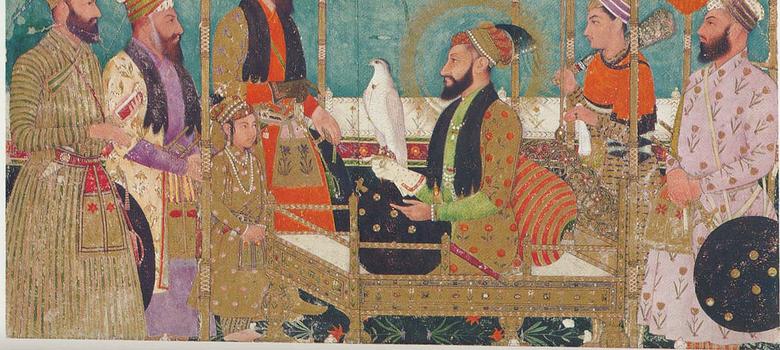
In 1636, Aurangzeb was a prince and the Governor of Deccan. En route to Aurangabad, he stopped at Burhanpur to pay his respects to his maternal aunt, who was married to Saif Khan, the Governor of Burhanpur. What followed varies in detail in different tellings. But all of them agree that the austere prince fell in love at first sight with one of the women in his uncle’s harem. Her name was Hirabai.
Ma’asir al-Umara, written by Nawab Shams ud Daula Shah Nawaz Khan and his son Abdul Hai Khan, in the 18th century provides a detailed description of the episode:
“One day the prince went with the ladies of his harem to the garden of Zainabad Burhanpur, named Ahu-khanah [Deer Park], and began to stroll with his chosen beloved ones. Zainabadi, whose musical skill ravished the senses, and who was unique in blandishments, having come in the train of Khan-i-Zaman’s wife (the prince’s maternal aunt), on seeing a fruit-laden mango tree, in mirth and amorous play advanced, leaped up and plucked a fruit, without paying due respect to the prince’s presence. This move of hers robbed the prince of his senses and self-control.”
Despite his extremely religious bent, Aurangzeb was a connoisseur of music and a proficient Veena player. Hirabai’s looks, combined with her musical accomplishments, proved irresistible for the prince. He is said to have been so infatuated with her that he gave in to her demand that he taste wine. But before he could, Hirabai revealed that she was just testing his love for her.
A religious prince ready to taste wine, that shows the extent of his feelings for her.
Akbar, in his bid to regulate the harem, had ordered that all concubines should be named after the place they belonged to. So once Hirabai entered Aurangzeb’s harem she was called Zainabadi.
Grieving in solitude
In Ahkam e Aurangzeb, written in 1640, Aurangzeb’s biographer Hamiduddin Khan Nimchah recounts the Burhanpur encounter differently. According to him, the meeting took place when the prince entered the harem unannounced. He fell into a swoon and, on being asked by his aunt, described the reason for the malady and asked for a remedy. He was given Hirabai in exchange for one of his concubines.
The ensuing passion and infatuation is described the same way in Nimchah’s account.
It is said in Ma’asir al-Umara that Aurangzeb’s love affair proceeded to such lengths as to reach Shah Jahan’s ears. Dara Shikoh, who had no love lost for his brother Aurangzeb, is said to have remarked to their father Shah Jahan, “See the piety and abstinence of this hypocritical knave! He has gone to the dogs for the sake of a wench of his aunt’s household.”
But as destiny would have it, Hirabai did not live for long. Her death affected the prince greatly. She is buried in Aurangabad.
Ma’asir al-Umara records that Aurangzeb was so upset by the death of his beloved that he left the palace to go on a hunt. When reproved by the poet Mir Askari (Aqil Khan) for risking his life in that agitated state, the prince replied:
“‘Lamentation in the house cannot relieve the heart,
In solitude alone you can cry to your heart’s content.”
Aqil Khan then recited this couplet of his own composition:
“How easy did love appear, but alas how hard it is!
How hard was separation, but what repose it gave to the beloved!”
The prince could not check his tears. He committed the verses to memory after vainly trying to learn the modest poet’s name.
Incomplete portraiture
Niccolao Manucci, the Italian traveller and writer (1639–1717), too describes this period in Aurangzeb’s life:
“Aurangzib grew very fond of one of the dancing-women in his harem, and through the great love he bore to her he neglected for some time his prayers and his austerities, filling up his days with music and dances; and going even farther, he enlivened himself with wine, which he drank at the instance of the said dancing-girl. The dancer died, and Aurangzib made a vow never to drink wine again nor to listen to music. In after-days he was accustomed to say that God had been very gracious to him by putting an end to that dancing-girl’s life, by reason of whom he had committed so many iniquities, and had run the risk of never reigning through being occupied in vicious practices.”
On this Valentine’s Day, remember that Aurangzeb’s portraits may depict an austere man reading the Quran, but there once lurked in him a passionate young man who had considered the “world well lost” for the love of his life.

http://www.mapsofindia.com/history/mughal-empire.html
This is a map of the Moghul Empire, which shows the territories and expansion under Babur, Akbar, and Aurangzeb, maxing out with him in 1707. Major cities are also present. A link has been posted to a larger image.
http://www.channel4.com/news/sunni-shia-islam-muslim-syria-middle-east-key-questions
At the heart of Syria’s bloody civil war is one of the oldest religious divide in history – that between Sunni and Shia Muslims. But what are the differences between them?
(graphic, Ciaran Hughes)
Why the difference?
The split between Sunni and Shia Muslims occurred following the death of the Prophet Muhammad, and was bound up in who should succeed him.
One group, later to become the Sunnis, believed in appointing the successor under Arab tribal tradition – the other, the Shias, believed Muhammad’s successor should be from his family, and backed Ali – Muhammad’s cousin – who was also his son-in-law.
There was a schism very early on and theological differences developed from this.
Dr Carool Kersten
The name Sunni comes from “Ahl-a-Sunnah”, meaning the “people of tradition”, denoting the traditional approach to appointing Muhammad’s successor. Shia is derived from “Shiat Ali”, meaning “the party of Ali”.
Sunni Muslims appoint a caliph as leader, whilst Shia Muslim’s appoint an imam. According to Dr Carool Kersten, senior lecturer in the study of Islam and the Muslim world at King’s College London, the divide denotes a split in what was seen as the role of Muhammad’s successors.
“There was a schism very early on and theological differences developed from this. The imams were considered to be infallible, whilst for the Sunnis the caliph was just a man, there to maintain law and order.”
Read International Editor Lindsey Hilsum’s blog: War, politics and sectarianism in Syria
However, the split between the groups was not definitive straight away. Ali was appointed by the Sunni Muslims as the fourth caliph – in that moment uniting the two factions’ leaders, both imam and caliph, into one person. He survived five years before dying in mysterious circumstances.
Ali’s son Hussein was not appointed caliph under the Sunnis, despite being the rightful heir under Shia beliefs. His death at the hands of the Sunni Umayyad family at the Battle of Karbala made him a martyr for the Shia cause. According to Dr Kersten, this was the decisive moment in splitting the Sunnis from the Shias.
“Karbala is the moment,” he told Channel 4 News. “There is a chant that you hear which goes ‘Every day is Karbala. We are all Hussein’.”
What are the differences today?
Geographically, the Sunni/Shia picture differs across the Middle East and the rest of the world (see graphic, above). Sunnis are the more dominant form of Islam – at least 80 per cent of Muslims worldwide. Some Sunni dominated countries include Saudi Arabia, Egypt, Turkey and Syria (see more on Syria, below).
Sunni and Shias – the two branches of Islam split at the start of their religion (picture: Getty)
However, Shia Muslims are the majority in some other countries such as Iran, Iraq, and more recently, Lebanon.
The ancient split has led to some different practices and approaches to theology being adopted by the different groups – but they share fundamental beliefs such as the “oneness” of Allah, that Muhammad was the last prophet, prayer and fasting.
It would be overly easy to say Shias are more moderate than Sunnis. You can find extreme elements on both sides of the equation.
Dr Carool Kersten
However, rivalries between the groups exist. The deaths of Ali and Hussein, and the fact that, as the minority, Shias have endured a more unpleasant history of repression, creates a theme of martyrdom throughout Shia history.
Sunnis, who often see themselves as the more traditional branch of Islam, have refered to Shias as “rejectors”, because of their perceived rejection of tradition.
Western perception is often that the Sunni branch is more extreme than Shi’ism – something increased by the fact that al-Qaeda adopts a Sunni Salafist doctrine.
However, according to Dr Kersten, it is not as simple as that. “It is overly easy to make that kind of distinction,” he said. “If you talk about Iran (where Shia are dominant), western opinion doesn’t view them as the moderate type. Some of the language that comes out of Iran definitely doesn’t fit that view.
“It is more political than anything else. Hezbollah, for example, represents a long-term repressed Shia minority – and they have certainly been becoming more beligerent.
“It would be overly easy to say Shias are more moderate than Sunnis. You can find extreme elements on both sides of the equation.”
New allegations from Zacarias Moussaoui, who is currently in prison for conspiracy to kill United States citizens as part of the 9/11 attacks, are causing people to take another look at the Saudi Royal families role in the 9/11 attacks. Moussaoui says that in the 1990’s Osama bin Laden tasked him with creating a digital database of al Qaeda’s donors. Moussaoui says that through this he was able to see that several members of the Saudi Royal family had been donating. Member’s of the royal family donating to al Qaeda included Prince Turki al-Faisal Al Saud, former director-general of Saudi Arabia’s Foreign Intelligence Service and ambassador to the United States.
While these claims are certainly interesting there are some questions about Moussaoui’s credibility. His own lawyers have at some point even submitted evidence that he is mentally incompetent. There is also the belief that he is just making these claims to bring attention to himself and to attempt to undermine Saudi-US relations. These claims he has made were taken in the form of sworn statements in October 2014, in the prison where he is serving a life sentence. [youtube]https://www.youtube.com/watch?v=ZtuoHdXMbnM[/youtube]
http://www.cnn.com/2015/02/03/politics/9-11-attacks-saudi-arabia-involvement/

